Four Visa blogs became one site with sales on every page
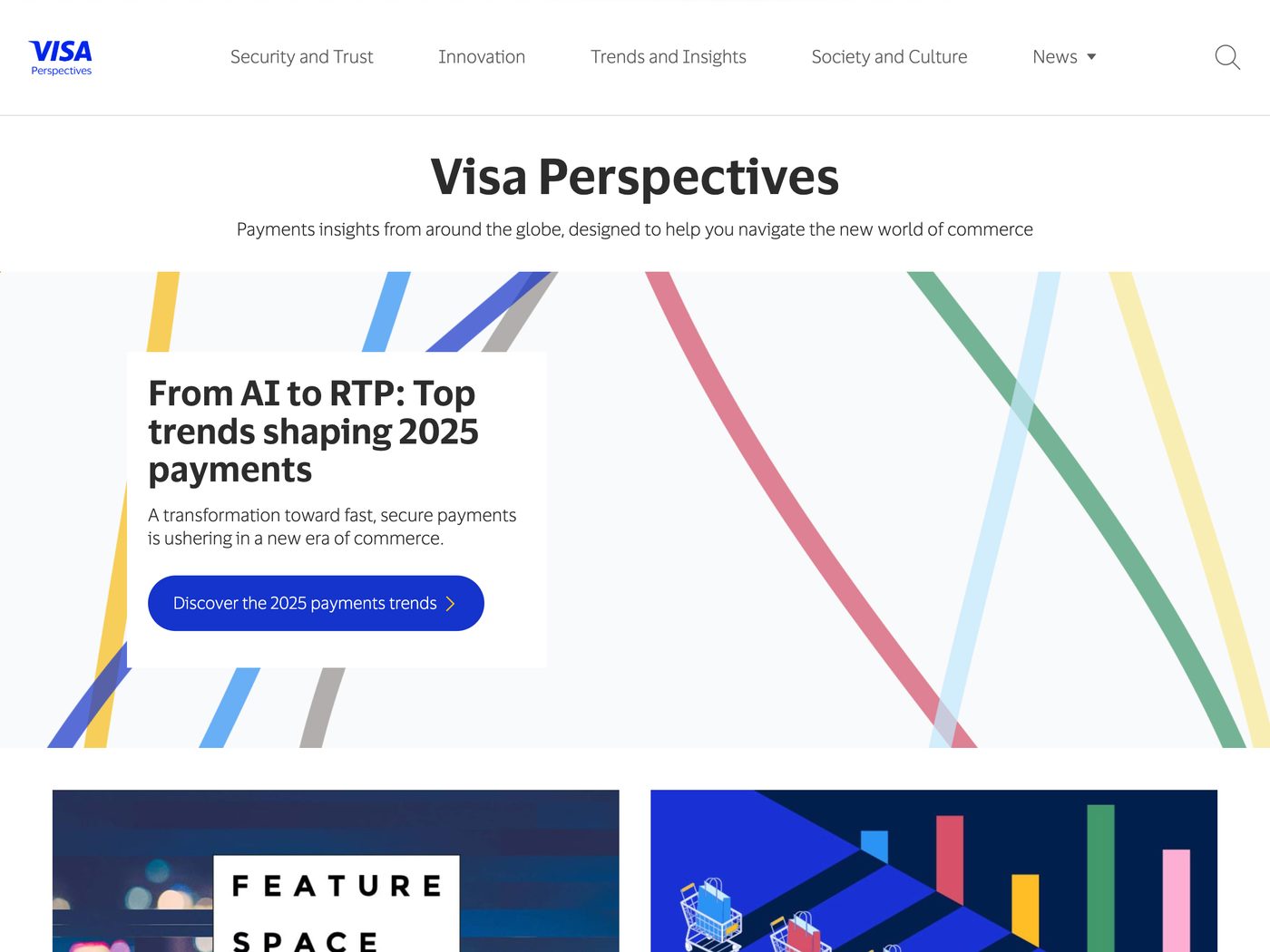
In 2018 our team of three launched Visa's corporate blog, and I ran it. Five years later it was holding us back. When Visa replaced it, I directed the design of the new site and decided how it would work.
Outgrowing the blog
The Visa Blog did its job. It gave our communications team a place to publish without filing a request with the Visa.com web team. I trained about 75 people on 22 teams to use it.
By 2023 it was one of four separate sites, alongside regional news sites for North America, Europe, and Central Europe, the Middle East and Africa. Stories linked to product pages, several clicks away from anyone in sales, and we couldn't see who was reading.
What I directed
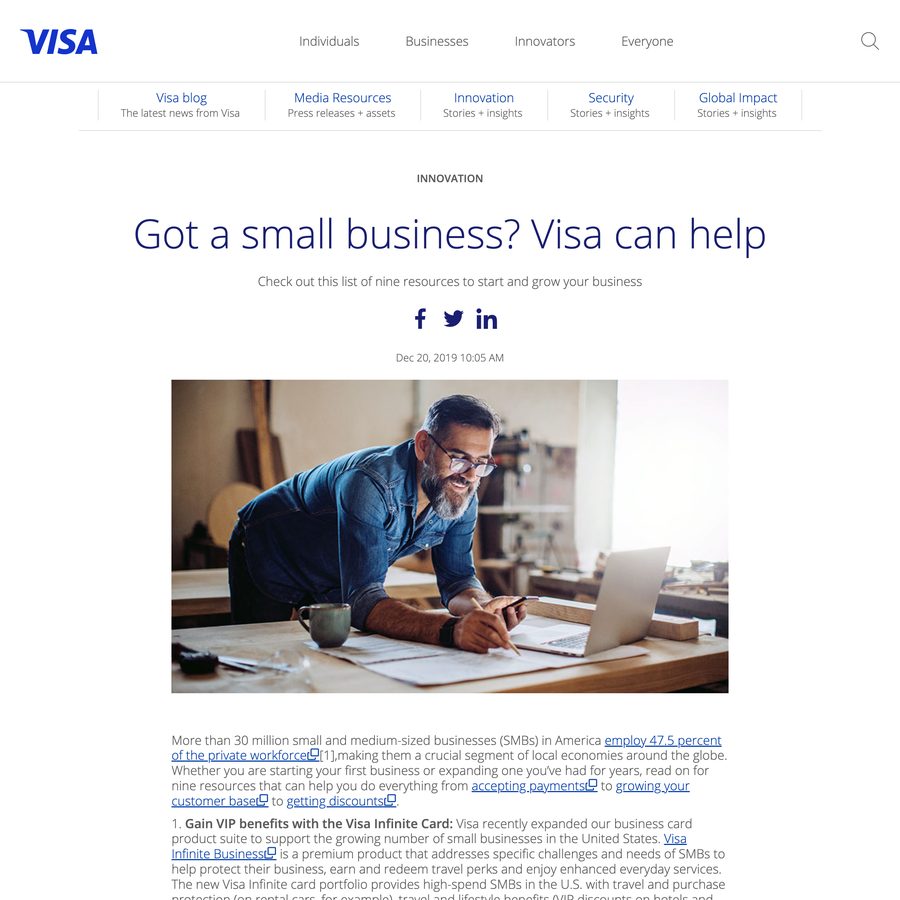
An agency designed and built the site. My direction came from knowing our audience and what Visa's web platform could do. I started with the article page because that's where readers spend their time. With the accessibility and SEO teams, I set rules for layout and linking so a reader who finishes one story can go deeper on a topic or read something related. Then I taught the communications team to apply them.
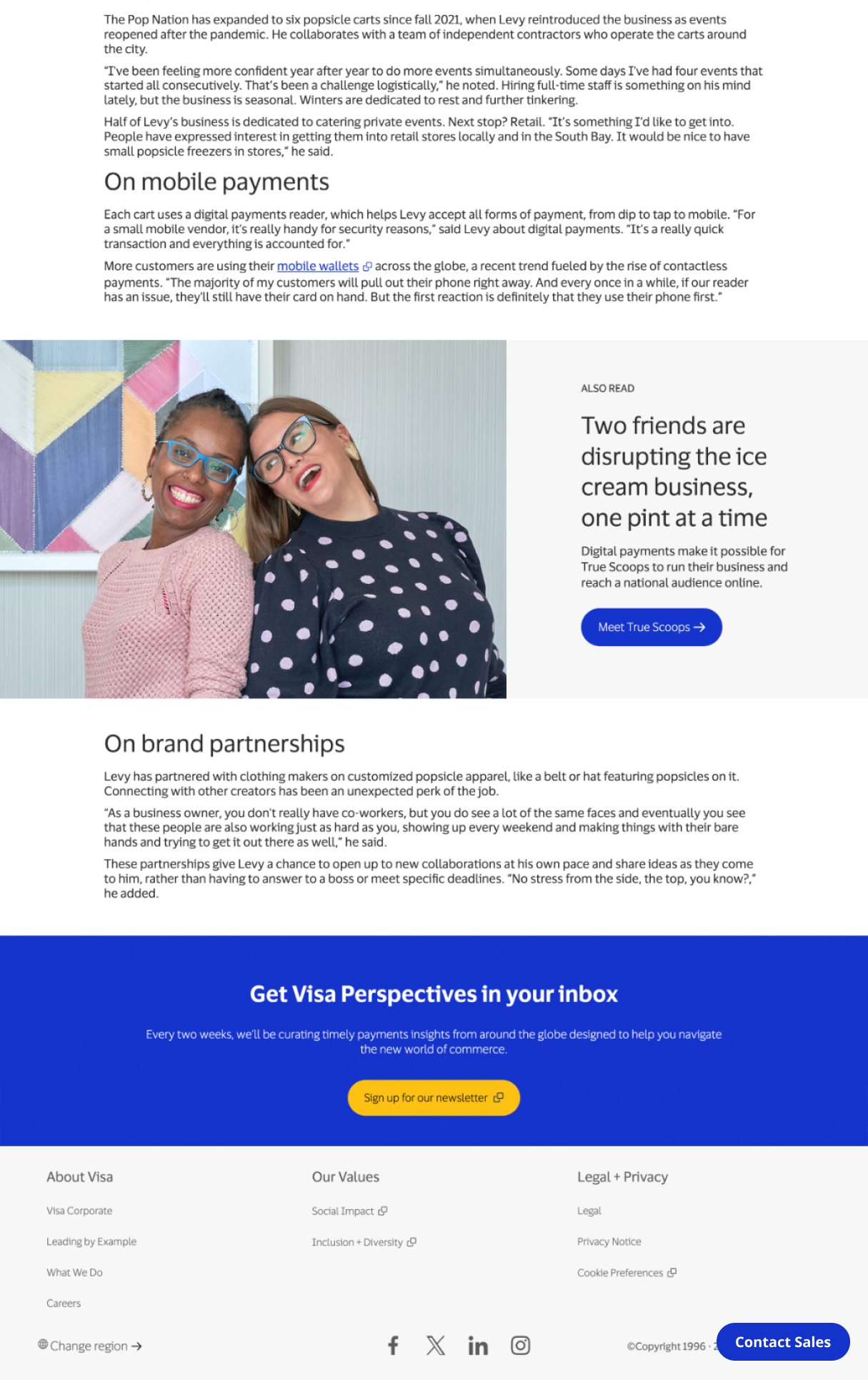
- 1Inline links point readers to more on the topic.
- 2A related story sits inside the article, so there's always somewhere to go next.
- 3The newsletter sign-up comes right after the story ends.
- 4Contact Sales stays on screen. One click reaches sales, and each click is tracked to its story. The old blog took several clicks and tracked none.
A small team had to publish for a global audience, so templates replaced one-off pages. That's why hundreds of stories look as if they belong together.
I set the visual direction, too. Custom illustrations gave us the same style across Visa Perspectives, social and Visa.com, and let us bring complex payments concepts to life in a way that was specific, engaging and true to the brand. Infographics gave readers more than one way into the data and put the most important information first. I directed photography in an editorial style because authentic images build trust with readers in a way stock photos don't.
Once the landing and article pages were built, I prioritized one back-end feature: category pages that filled themselves with the newest stories, plus a manual override for hero stories. It ended hand-curating every page, which freed my time for the creative work.
Built to run without me
I couldn't personally help every colleague who needed to publish, so I trained an AI agent on everything about the site, from writing to page building to search. A prompt library, more than 10 training guides and a global playbook backed it up. About 25 people trained on the system, and regional teams in Europe and in Central Europe, the Middle East and Africa came on board next.
Publishing a statement during a crisis went from 36 hours to 15 minutes. The time to edit and publish a story dropped 90%.
The first year
Visa Perspectives launched in October 2024. In its first year:
- 227 million views from 99 million readers; 30% came back
- Stories with custom visuals drew 22% more engagement than stories with only a stock photo. One visual piece, “Commerce of Tomorrow, Today,” sent 54 readers to sales.
- A 43% engagement rate overall, and 71% to 76% when a single campaign took over the homepage, such as a product launch or Visa's flagship client event
- More than 1,000 readers clicked straight to Contact Sales, the first direct line from Visa's corporate stories to its sales team
- 6,253 newsletter subscribers
- Finalist in three 2025 Content Marketing Awards categories, including Best B2B Publication
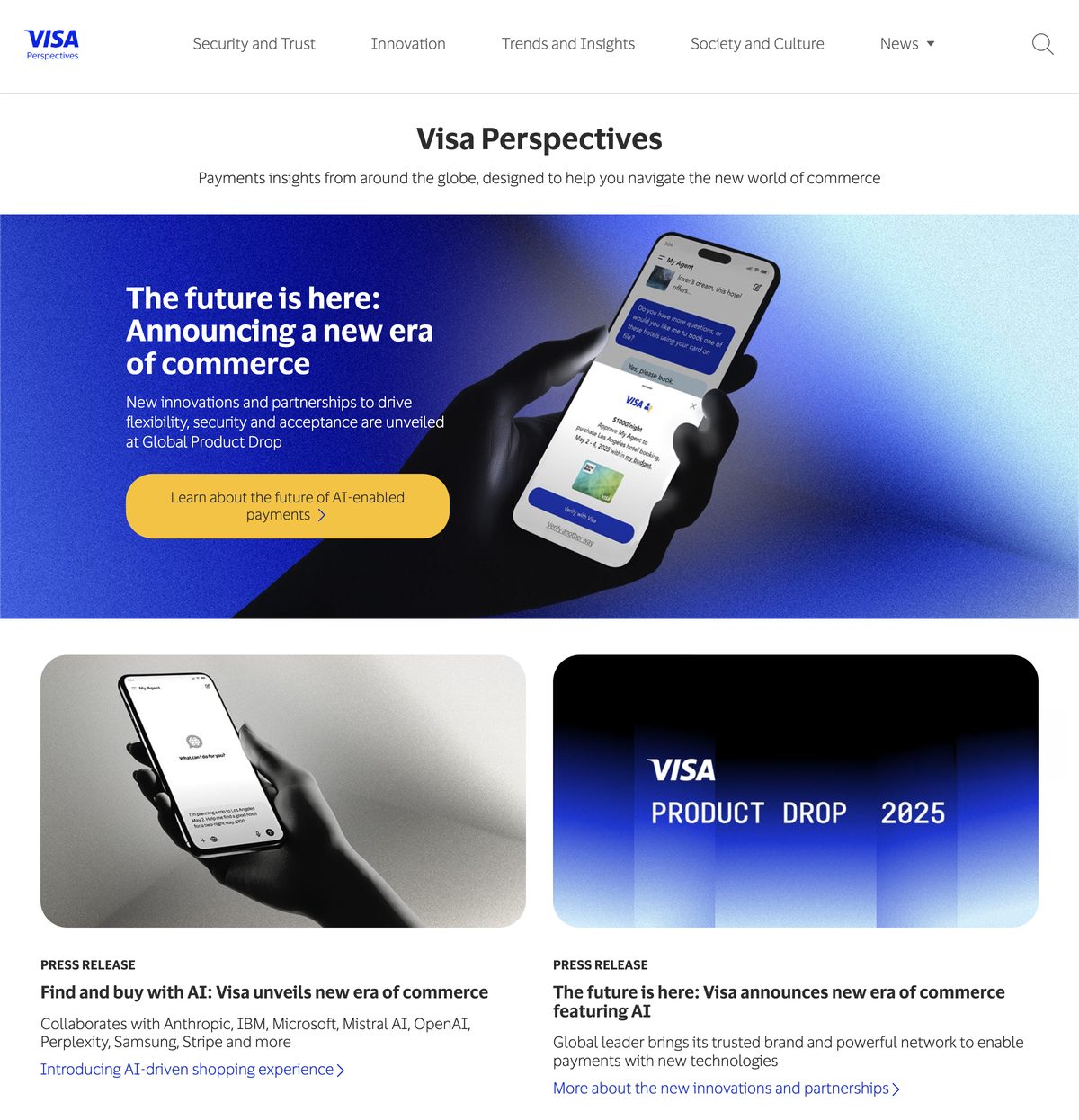


The blog taught me what Visa's stories needed. With Visa Perspectives, I built it right the second time, starting with templates and a clear visual system that let a small team publish like a much bigger one.
*North America and Europe moved to Visa Perspectives before I left Visa. The rest of the migration continued after that.